Article

Circular industry: turning vulnerabilities into competitive advantage
Discover how the circular economy restores resilience and competitiveness to industry at a time of mounting pressure.
Why is industry particularly exposed to the linear model?
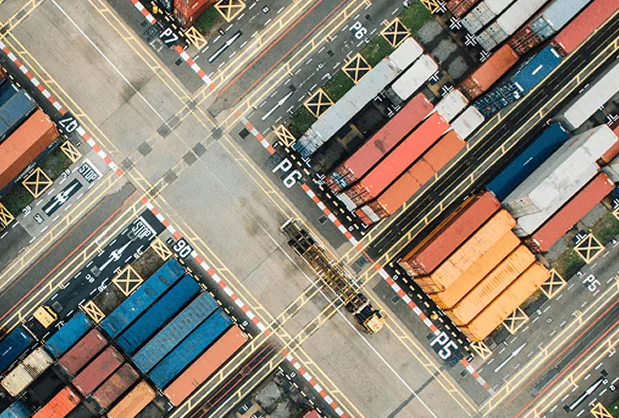
Industry is one of the sectors most dependent on primary resources. Rare metals, plastics, fossil energy: industrial value chains rely on massive flows of materials whose availability is increasingly uncertain.
In practical terms, the risks today fall into three categories:
- Supply risk: the concentration of production of many critical materials (lithium, cobalt, rare earths) in a small number of countries exposes manufacturers to unpredictable geopolitical disruption.
- Economic risk: volatile raw material and energy prices erode margins and make medium-term planning very difficult.
- Regulatory risk: European and French legislation (the ESPR regulation, the green taxonomy, CSRD, the AGEC law) is imposing ever greater requirements on traceability, carbon footprint and waste management.
These three risks point to the same conclusion: maintaining a linear industrial model has itself become a business risk.
The circular economy in industry: what does it actually mean?
The circular economy applied to industry is not simply about recycling. It covers a set of complementary levers acting across the entire life cycle of products and materials:
1. Eco-design: rethinking products from the design stage to make them easier to repair, dismantle and recycle. A well-designed product costs less to maintain, generates less waste and holds more value at end of life.
2. Repair and remanufacturing: remanufacturing means restoring used components to give them a second life of equivalent value to new. The practice can cut raw material consumption by up to 80% on certain industrial parts.
3. Industrial symbiosis: one factory's waste or by-products become another's resources. This pooling logic, already in place in several French industrial zones, creates value where there were only treatment costs.
4. Product-service systems: moving from selling a product to selling its use (rental, maintenance included, guaranteed performance). This model gives manufacturers every incentive to produce durable, repairable equipment, since they retain ownership over the long term.
5. Optimised management of secondary resources: developing collection and sorting channels to recover end-of-life materials and feed them back into production chains, reducing dependence on primary resources.
What concrete benefits for manufacturers?
Contrary to popular belief, the circular transition in industry is not solely an environmental matter. It delivers measurable gains across several dimensions:
- Lower costs: fewer raw materials purchased, less waste to treat, less energy consumed.
- More secure supply: less dependence on volatile global markets thanks to the use of local secondary resources.
- New revenue: service-based and remanufacturing models open up recurring revenue streams.
- Regulatory compliance ahead of time: adopting circular practices today means meeting tomorrow's regulations before they take effect.
- Attractiveness and reputation: clients, public buyers in particular, increasingly build environmental criteria into their tenders.
The Circular Industry Coalition: nine major manufacturers take action
In response to these challenges, Circul'R and CEA ISEC, with the support of the French Directorate General for Enterprise (DGE), have launched the Circular Industry Coalition. It brings together nine committed manufacturers: Alstom, Equans, Forvia, Legrand, Rexel, RTE, Safran, Groupe SEB and Thales.
For a year, these organisations worked together to:
- Share a common diagnosis of the vulnerabilities linked to the linear model
- Identify the practical barriers to scaling circular solutions in industry
- Build an operational roadmap to accelerate the transition
Their shared conviction: only a collective approach can meet industry's systemic challenges. Circular solutions cannot be rolled out silo by silo; they require cooperation between companies, between value chains and between regions.
The "Circular Industry" report: a practical tool for taking action
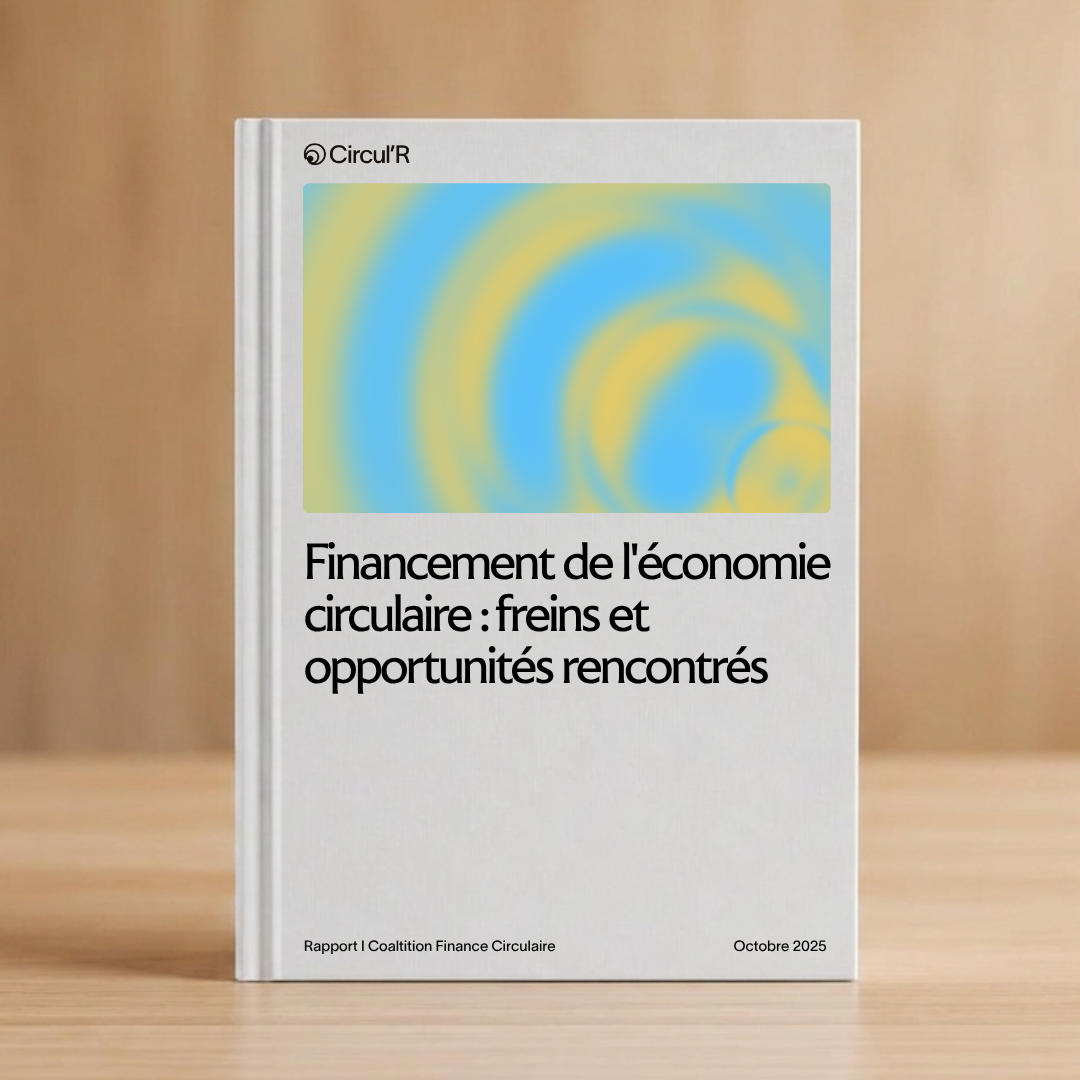
The coalition's work has resulted in a full report entitled "Facing systemic vulnerabilities: building a competitive, sovereign industry through a strong circular economy".
It offers:
- A shared diagnosis of the industrial vulnerabilities linked to the linear model
- A map of the barriers to scaling circular solutions
- An operational roadmap with levers of action prioritised by sector
Circul'R supports manufacturers in their circular transition
Since 2016, Circul'R has been supporting companies and regions on their way to the circular economy. In the industrial sector, our assignments cover circularity audits, eco-design, business model development, partner sourcing for industrial symbiosis and the facilitation of multi-stakeholder coalitions.
FAQ
What you need to know about us.
Qu'est-ce que Circul'R ?
Circul'R est un cabinet de conseil spécialisé en économie circulaire. Depuis 2016, il accompagne plus de 150 grandes entreprises et acteurs publics à travers des missions de conseil, des coalitions sectorielles, des programmes de formation et le Club Circul'R.
What types of organizations do you work with?
Contrairement à un cabinet RSE généraliste, Circul'R est spécialisé exclusivement en économie circulaire depuis 2016. Cette expertise transverse - filières, réglementations (AGEC, REP, ESPR), business models - lui permet de transformer la circularité en avantage compétitif mesurable : réduction d'impact, sécurisation des ressources, conformité et nouveaux relais de croissance.
What is the process for a consulting project with Circul'R?
Circul'R conseille les grandes entreprises privées - dont de nombreux groupes du CAC 40 et du SBF 120 - sur leurs décisions stratégiques, tous secteurs confondus. Le cabinet accompagne également les acteurs qui déploient les politiques publiques d'économie circulaire : éco-organismes, agences, bailleurs de fonds et collectivités.
Do you operate only in France or internationally as well?
Circul'R propose quatre offres complémentaires : des missions de conseil sur mesure pour structurer votre stratégie circulaire, des coalitions sectorielles pour résoudre des problématiques communes entre entreprises, des formations pour monter en compétence sur l'économie circulaire, et le Club Circul'R, le réseau des entreprises engagées dans la transition circulaire.
How can the circular economy be practically integrated into an existing business strategy?
Circul'R accompagne ses clients sur l'ensemble du cadre réglementaire français et européen de l'économie circulaire : loi AGEC, filières REP, CSRD, ainsi que les textes européens récents (PPWR, ESPR, CRMA). Le cabinet traduit ces obligations en feuilles de route opérationnelles, pour transformer une contrainte de conformité en avantage stratégique.
What is a sector-based coalition and how can I participate?
Une mission démarre par un diagnostic de vos enjeux circulaires (approvisionnement, éco-conception, business model, réglementation, etc.). Circul'R construit ensuite une feuille de route chiffrée et priorisée, avant d'accompagner le déploiement opérationnel des actions retenues jusqu'à la mesure d'impact et l'ajustement continu de la trajectoire.
How do you measure the results of your projects?
Basé à Paris, Circul'R intervient principalement en France et en Europe. À l'international, il accompagne des projets de coopération : partage de l'expertise française sur la REP, appui aux bailleurs de fonds sur leurs programmes de transition circulaire dans les pays émergents, via un réseau de partenaires opérationnels et d'experts sectoriels.
What is the average duration of a project?
Contactez l'équipe via le site : Circul'R analyse vos enjeux puis propose le dispositif adapté (mission de conseil, rejoindre une coalition, suivre une formation ou adhérer au Club) pour accélérer votre transition vers l'économie circulaire.