
Critical materials and sovereignty
Secure your value chain against material risks.
Resource scarcity, price volatility, and geographic concentration: dependency on critical materials puts revenue and industrial strategy at risk. Beyond the materials themselves, it is the resilience of business models that is at stake.

Over 150 major corporations and public entities trust us.







Challenges
Critical materials expose companies to issues of dependency, sovereignty, and competitiveness.

Geographic concentration of critical resources
China, Russia, DRC: the extraction and processing of many critical materials remain concentrated in a few countries, exposing value chains to export restrictions and geopolitical shocks.
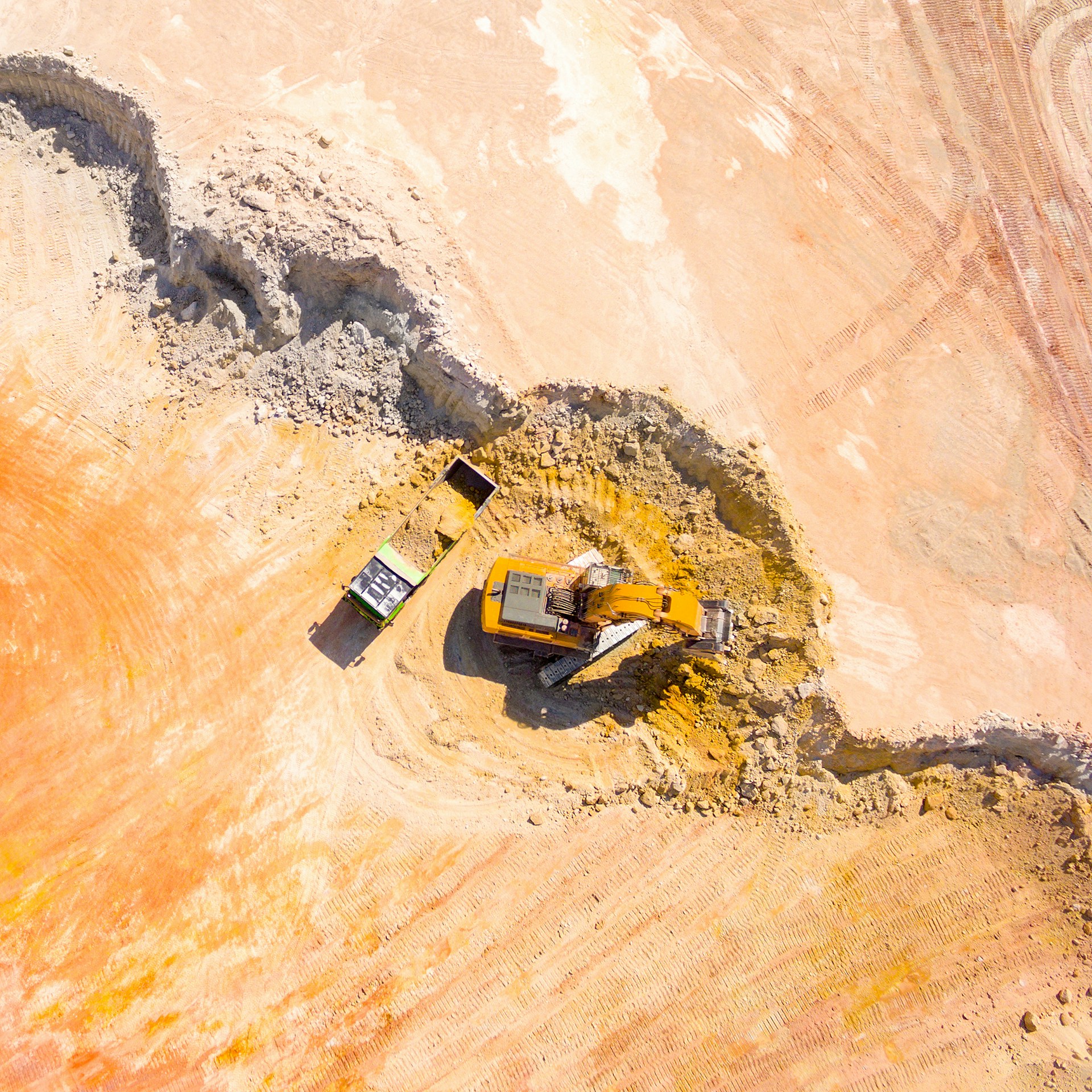
Rapidly growing demand
Lithium, cobalt, graphite: global demand for some of these materials could increase four to six-fold by 2050 due to the energy transition, with no guarantee of supply.

The blind spot beyond Tier 1
Producers, distributors, and integrators often lack visibility into their actual exposure to critical materials due to a lack of comprehensive insight or robust supply chain traceability.
Methodology
From material risk to industrial strategy.
Risk assessment
Quantifying exposure to material risk (probability and severity of potential supply shocks) using a standard EU methodology that cross-references internal and external factors.
Prioritizing solutions
Identifying circular and non-circular solutions, modeling their impact on material risk at various ambition levels, and conducting prioritization workshops with your teams.
Stress testing and scenarios
Simulating material shocks and building prospective scenarios to test the resilience of your industrial strategy.
Action plan
Defining a risk mitigation strategy based on clear objectives, prioritized solutions, and their associated deployment roadmaps.
Impacts
Three value levers activated by this expertise.

Industrial resilience
Reduced critical dependencies, secured supply chains, and preparation for geopolitical and regulatory shocks across value chains.

Economic performance
Objective assessment of revenue at risk, enabling informed trade-offs between circular and non-circular solutions.

Competitive advantage
A systemic, tool-based view of material exposure, providing a competitive edge over rivals still blind beyond tier 1.
Services
How we work
on this expertise.






Experts
Our experts.



FAQ
What you need to know about us.
Why secure your strategic materials?
Dependency on critical raw materials exposes businesses to price and supply risks. The circular economy strengthens sovereignty by reintegrating these strategic materials into reuse and recycling loops.
What are strategic materials?
These are raw materials critical to a business or economy (rare metals, rare earths, key components) for which access is limited or risky.
How does Circul'R help secure supplies?
Circul'R maps your strategic material flows, assesses risks, and identifies upstream circular loops (reuse, recycling, substitution) to reduce dependency.
How does the circular economy strengthen sovereignty?
By localizing material value through reuse and recycling, the circular economy reduces import dependency and secures access to strategic resources.
Which sectors are affected?
Manufacturing, electronics, energy, defense, automotive, retail, construction: any sector exposed to critical raw materials or supply chain tensions.
What are the tangible benefits?
Reduced supply risk, controlled material costs, regulatory compliance, and increased value chain resilience.
How long does it take to see results?
A risk assessment can be completed in a few weeks; implementing circular loops then follows a tailored roadmap.
What is Circul'R?
Circul'R is a consulting firm specializing in the circular economy. Since 2016, we have supported over 150 large companies and public organizations through consulting projects, sector-specific coalitions, training programs, and the Circul'R Club.
How do I get started?
Contact the team via our website: we map your strategic materials and identify the circular levers you can activate.