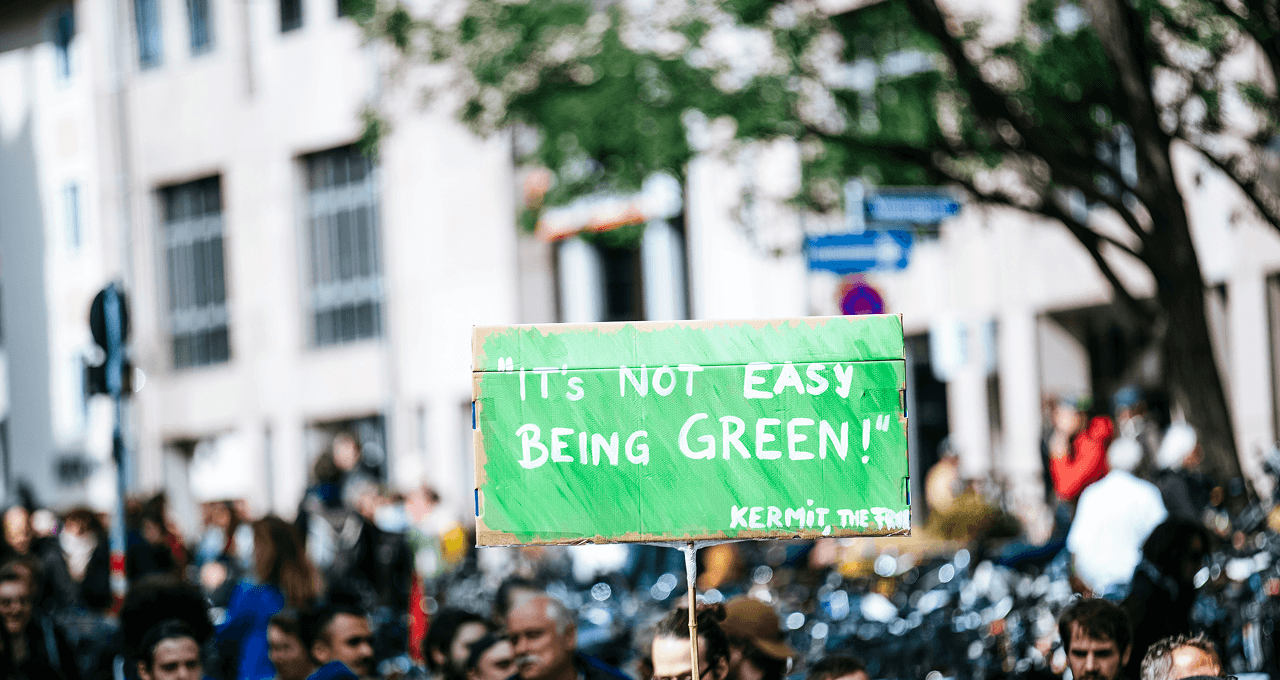
Have you seen the green packaging, the stylized leaf, the slogan "100% natural"...
You may have felt like you were being sold a promise rather than real change. There’s a name for that feeling: greenwashing.
Long considered merely a reputational risk, this practice is now a criminal offense in France. And yet, in October 2025, the DGCCRF found that more than 15% of the businesses inspected had serious violations regarding their environmental claims.
At Circul'R, we work every day with companies that are genuinely committed to the circular economy. This article is designed to help you understand what greenwashing really is, how to spot it, and, most importantly, how to avoid it—without falling into the other trap: greenhushing (keeping your commitments under wraps for fear of criticism).
What is greenwashing? Definition
Greenwashing refers to a company’s practice ofexaggerating, embellishing, or misrepresenting its environmental efforts in order to project a more virtuous image than is actually the case. The goal is to capitalize on growing consumer demand for sustainable products and services without having made the corresponding efforts.
Greenwashing can take many forms:
- Vague claims such as "environmentally friendly product," without evidence or certification
- Misleading imagery (green leaves, water droplets, natural landscapes) on polluting products
- Selective data that highlights a single positive aspect while obscuring the overall impact
- Fictitious labels created out of thin air, without any external verification
- Carbon offsets touted as a silver bullet for unchecked emissions
Greenwashing and greenhushing: two sides of the same coin
When it comes to environmental communication, companies face two challenges:
- Greenwashing involves saying too much and saying it wrong: exaggerated claims, a lack of evidence,and a reality that’s been sugarcoated.
- Greenhushing, on the other hand, involves saying nothing at all for fear of being criticized. According to a South Pole study (2024), 44% of communications and CSR directors admit to having stopped speaking out about their environmental commitments for fear of criticism.
Both of these approaches are dead ends. The first exposes companies to legal penalties and consumer distrust. The second deprives the ecological transition of inspiring examples and hinders the evolution of practices.
The right approach is one of balanced, factual, and transparent communication—something we support at Circul'R.
Why is greenwashing so widespread?
The pressure is mounting. Consumers want brands that are socially responsible, investors are evaluating ESG criteria, and public tenders are incorporating environmental criteria. Faced with this demand, some companies are giving in to the temptation to publicize commitments that are still vague or nonexistent.
But vigilance has also increased. On the consumer side, groups like BonPote and the Pour un Réveil Écologique movement are scrutinizing and publicly exposing false environmental claims. Negative publicity stemming from greenwashing can spread in a matter of hours and destroy years of hard-earned trust.
As for regulators, legislation is becoming much stricter. The days of unregulated environmental reporting are over.
The legal framework against greenwashing in France and Europe
This is where many companies underestimate the risks. Greenwashing is no longer just a bad practice—it’s a violation.
In France:
- The law AGEC has banned vague or unsubstantiated environmental claims on products and packaging. Broad terms such as "biodegradable," "eco-friendly," or "environmentally friendly" are now prohibited.
- The Climate and Resilience Act went even further by classifying greenwashing as a deceptive business practice in the Consumer Code, on par with financial scams or false claims about a product’s origin.
At the European level:
Several key regulations reinforce this trend:
- The EmpCo regulations prohibit generic environmental claims without recognized performance metrics, as well as sustainability labels that are not based on official certification.
- The Ecodesign Regulation requires greater accuracy in the environmental information provided to consumers.
- The PPWR packaging regulation requires companies to be able to substantiate all their environmental claims.
- The ECGT Directive (Empowering Consumers for the Green Transition) aims to harmonize European rules by banning vague or unverified claims and uncertified labels.
What specific penalties could one face?
The risks are very real and multifaceted.
Reputational risk:
In the age of social media, publicly exposed greenwashing can permanently undermine customer trust. The Advertising Ethics Jury (JDP) can issue public statements that exert significant moral pressure, even without any coercive power.
Criminal and civil liability:
Greenwashing is a criminal offense subject to severe penalties under the Consumer Code.
For a standard offense:
- A fine of up to €300,000 for individuals
- A fine of up to 1.5 million euros for companies, which may be increased to 10% of annual revenue or 80% of the relevant advertising expenditures
- Up to two years in prison
When the offense is committed via a digital platform (website, social media, etc.), the penalties are more severe:
- A fine of up to €750,000 for individuals
- Fines of up to 3.75 million euros for companies
- Up to 5 years in prison
The DGCCRF (Directorate General for Competition, Consumer Affairs, and Fraud Control) has the authority to bring criminal charges, and victims may also file civil lawsuits.
How to Avoid Greenwashing: 5 Key Principles
Communicating about your circular economy commitments without resorting to greenwashing is not an impossible task. Here are the principles we uphold at Circul'R:
1. Communicate only what can be proven: any environmental claim must be based on verifiable data, actual measurements, and recognized certifications.
2. Be measured in your statements: if a process is underway, present it as such, not as a foregone conclusion. Humility and progress are strengths, not weaknesses.
3. Avoid vague terms: " green," "eco-friendly," and "sustainable"—when used without further clarification—are red flags from a regulatory standpoint. Opt for factual statements instead: "made from 40% recycled materials," "carbon footprint reduced by 30% since 2021."
4. Choose certified labels: only labels established by public authorities or based on independent certification systems are legally acceptable.
5. Highlight the complexity: a circular approach isn’t perfect from the start. Show progress, acknowledge limitations, and explain the roadmap: it is this transparency that builds trust.
Circul'R: Taking It Further
At Circul'R, we help companies that are genuinely committed to the circular economy communicate their commitments effectively. Whether you need to train your teams, audit your practices, or develop your communication strategy , we’re here to support you.
Together with ADEME, we have co-authored a comprehensive practical guide titled "How to Effectively Communicate About the Circular Economy" (December 2025), which serves as a reference for companies seeking to balance transparency requirements with the promotion of their initiatives.
A recording of the guide’s presentation is also available online, offering an opportunity to learn about the key points alongside the Circul’R and ADEME teams.

.jpg)